Get Healthy!
- Posted December 18, 2025
High-Fat Cheese, Cream Might Protect Brain Against Dementia
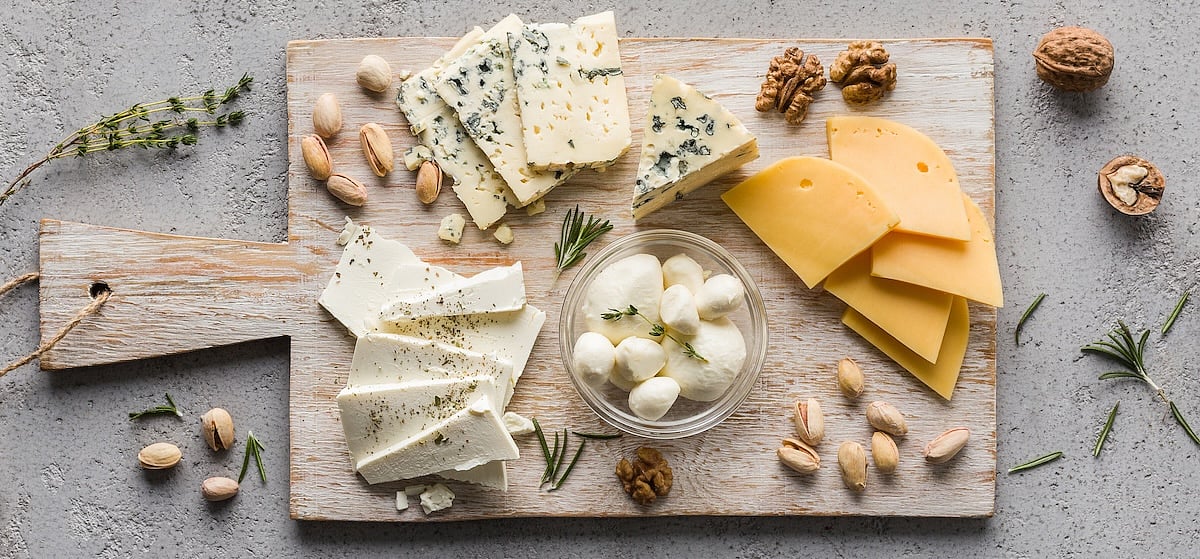
Cheese is frequently featured in holiday gatherings, whether it’s grandma’s cheese ball, a fancy baked Brie or a cheese-laden gift basket.
Who knew all these holiday treats might be saving people’s brain health?
Eating more high-fat cheese and high-fat cream might be linked to a lower risk of dementia, according to a new study published Dec. 17 in the journal Neurology.
“For decades, the debate over high-fat versus low-fat diets has shaped health advice, sometimes even categorizing cheese as an unhealthy food to limit,” said senior researcher Emily Sonestedt, an associate professor of nutrition at Lund University in Sweden.
“Our study found that some high-fat dairy products may actually lower the risk of dementia, challenging some long-held assumptions about fat and brain health,” she said in a news release.
High-fat cheeses include more than 20% fat and include varieties like cheddar, Brie and Gouda, researchers said in background notes. High-fat creams typically contain 30% to 40% fat, and include whipping cream and clotted cream.
For the new study, researchers analyzed data from nearly 27,700 people in Sweden with an average age of 58. These folks were tracked for an average 25 years, during which more than 3,200 developed dementia.
Participants provided food diaries of what they ate for a week, answered questions about how often they ate certain foods during the past few years, and talked with researchers about how they prepared their food.
The research team compared the brain health of people who ate 50 grams or more high-fat cheese daily -- about two slices of cheddar or a half-cup of shredded cheese -- to those who ate less than 15 grams a day.
Results showed that those who ate more high-fat cheese had a 13% lower risk of developing dementia than those who ate the least.
People who ate more high-fat cheese specifically had a 29% lower risk of vascular dementia, which is caused by impaired blood flow to the brain, researchers said.
High-fat cheese lovers also had a 13% lower risk of Alzheimer’s disease, but only if they didn’t have genetic risk factors for Alzheimer’s, researchers said.
The team also compared people who consumed 20 grams or more of high-fat cream daily -- about 1.4 tablespoons of heavy whipping cream -- to those who consumed none.
Those who ate loads of high-fat cream had a 16% lower risk of dementia, the study found.
However, no links were found between dementia risk and eating low-fat cheese or cream, or any type of milk, butter or fermented milk products like yogurt or buttermilk.
“These findings suggest that when it comes to brain health not all dairy is equal,” Sonestedt said.
“While eating more high-fat cheese and cream was linked to a reduced risk of dementia, other dairy products and low-fat alternatives did not show the same effect,” she continued. “More research is needed to confirm our study results and further explore whether consuming certain high-fat dairy truly offers some level of protection for the brain.”
The study’s design could not prove a cause-and-effect link between dementia risk and high-fat cheese or cream, only an association, researchers noted.
In an accompanying editorial, associate professor Tian-Shin Yeh of Taipei Medical University in Taiwan wrote that “the study makes a fairly strong case that dairy fat per se is not associated with dementia.”
However, Yeh noted an important limitation of the study: “Dietary intake was assessed only once at baseline, which may not reflect long-term dietary habits over the 25-year follow-up.”
She continued: “Replication in diverse populations with different dietary patterns will be essential. Prospective cohorts with repeated dietary assessments are needed to better capture long-term changes in consumption.”
Sonestedt noted that these results might not be the same for Americans. In Sweden, cheese is often eaten uncooked, but in the U.S. cheese is often heated or eaten with meat.
More information
The National Institute on Aging has more on diet and risk of Alzheimer’s disease.
SOURCE: American Academy of Neurology, news release, Dec. 17, 2025


